Showing posts with label Gear. Show all posts

Our Marvelous Mariposas

We were having a leisurely "working" afternoon in bordertown La Quiaca (Argentina), entering in data collection and treasuring our last sips of Argentine wine before crossing into Bolivia, when the e-mail from Grant Sible at Gossamer Gear came through. He asked if we were interested in testing out their new Mariposa 2012 Ultralight Backpack to which, after a teenage screaming-jumping fest, we happily accepted.

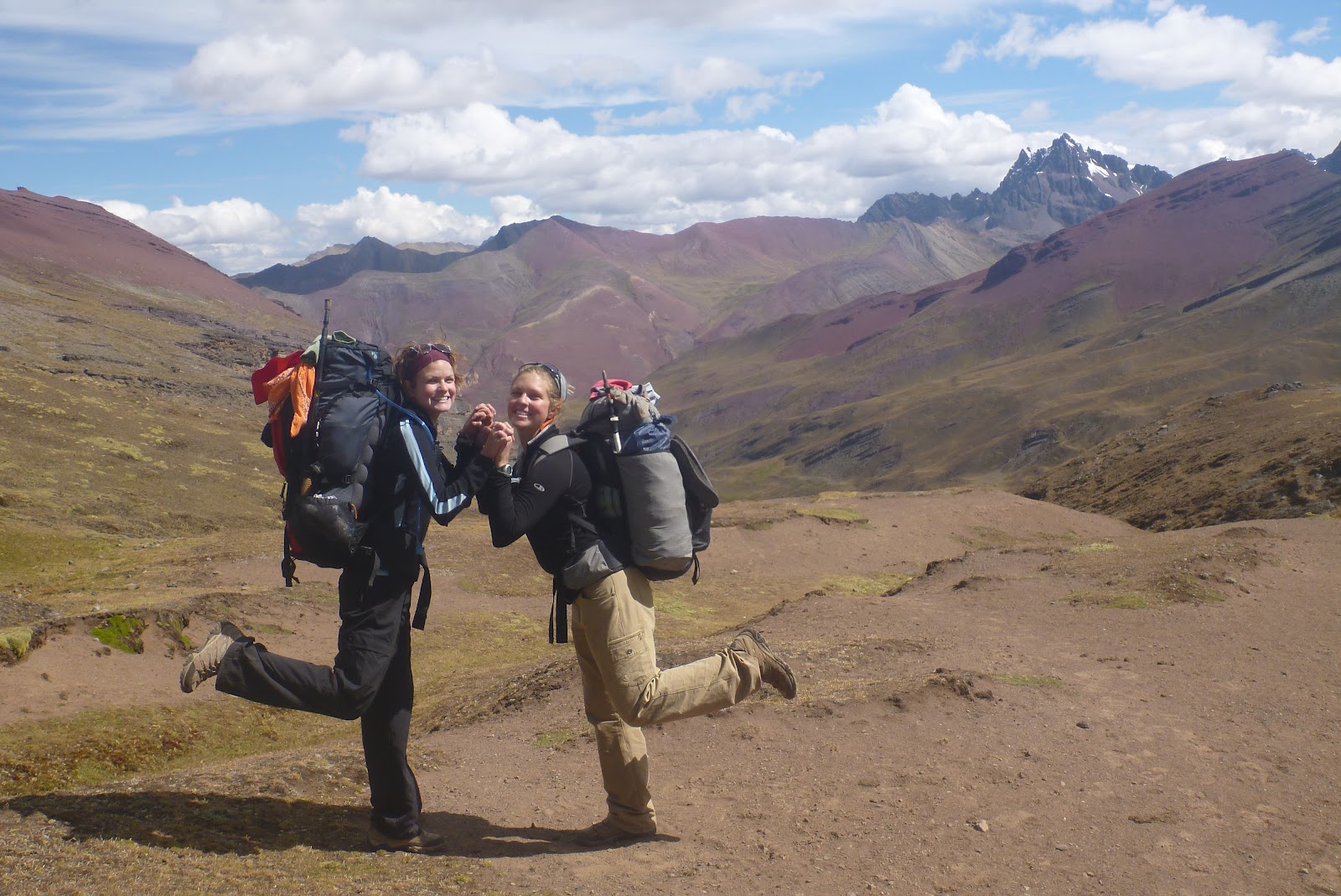
The Mariposas are integral to our lightweight mission and have become part of our identity- we're those chicas locas with those impossibly small gray packs. "That's all you have for the year?" is a question we receive regularly. The pack weighs in at a mere 27 ounces, several pounds lighter than a woman-specific traditional backpack averaging four to five pounds. The Mariposa cuts out the crap from a traditional backpack's design- no excessive zippers, buckles, straps, pockets or padding- and sports the following love-em! key features.

Love-Em! Key Features
  • Uses a sleeping pad as back support 
    • To the envy of every traditional backpacker we have met along the way, we conveniently pull out our sleeping pad for use as a sit pad for any sit-down break
    • Our pad is a tri-folded and trimmed-to-torso-length Therm-A-Rest Ridge Rest SOLite
  • Surprisingly durable fabric (custom 140 denier Dyneema GGridstop™), which makes us wonder why we ever needed the cordura fabric of our now retired traditional packs
  • Super cool shock cord system that we use for strapping wet laundry onto the top of the pack to dry (or Shelley often uses it for a quick stow of a shedded clothing layer)
  • Accommodates a hydration bladder with a secure interior pocket and accompanying hydration tube exit hole
  • Seven sizeable exterior pockets make everything accessible... no need for a full-length frontal or full-width lower zipper often seen on traditional backpacks. Anything needed during the day can be accommodated in one of the exterior pockets (extra layers, water bottles, snacks, water treatment etc) or in the top of the pack body (where we store our lunch). Some anecdotes for a few of the pockets we'd like to highlight:
    • Lower right-side pocket. I keep both my 1L generic store-bought waterbottle and our handheld GPS in this pocket (and sometimes a snack) - they fit securely and are easily accessible.
    • Upper right-side pocket. A "safe" place for fragile items such as our popcan stove or Amazon Kindles.
    • Long left-side pocket.  Sarah can both grab and stash her trekking poles in this pocket without taking her pack off. Also wide enough to store tents, puffy jackets etc.
    • Large frontal mesh pocket. For drying orange peels or too-dirty-or-wet-or-smelly-to-put-inside-your-pack items.
    • Hip belt pockets. For easy access to small personal items such as lipstick to celebrate the 4th of July on the trail.
This is a great starter pack for traditional backpackers seeking to experiment with a lightweight system (can handle up to 35lbs) and for ultralight enthusiasts looking for ultralight quality and a personally modifiable pack. The stay (3.5oz), hip belt (5.15oz), and integrated shock cord lacing are all removable for those counting each ounce (or as we like to say to our English-speaking foreign friends, "giving a damn for each gram!"). For us, it has been a perfect blend of weight, durability and load capacity. We need to be prepared for grazing pokey bushes in the desert, scrambling through sharp rock on high passes, or brushing tree branches while swinging through the jungle. Additionally, we've needed the ability to carry up to ten days of heavy South American-resupplied food (no freeze-dried backpacking food or flat-pack tuna here!) and to carry up to seven liters of water in the desert or when we've been unsure of our next water source. The Mariposa has done it all for us.

What would we suggest for a future version?
  • More friction on adjustment cordage- Sarah and Shelley have experienced some slippage in the adjustment webbing of the shoulder straps
  • Removal of bungee cinch on underside of top (or use velcro to cinch)- it gets in the way and tangled when packing into the main body of the pack so I removed the cord from my pack altogether and don't miss it
  • Fragile mesh on front pocket- we all have gotten holes in the front mesh, whoops! Maybe we should be more gentle... 
We are proud to sport Gossamer's marvelous Mariposas and uphold their "take less, do more" motto. Each day on our journey is a new surprise. We don't know if we will be on an open dirt road, navigating steep cliffsides, skiing down skree, hopping our way through a marsh, maintaining our balance while sliding down a muddy hillside or cramming into a tight bus. All the while, we are grateful to have our lightweight system supported by our Mariposa packs that allows us to navigate what the trail throws at us all at a moment's notice.

Our beloved Mariposas can be found on Gossamer's website here for an affordable $235.

Shelley feeling good after a big ascent (1600m/ 5,250ft) up San Juan pass (4200m) in Choquequirao, Peru
Trinity enjoying altitude atop the first of two 5000m+ passes of the day (Cuyoc pass, Cordillera Huayhuash, Peru - 5000m/ 16,400ft)
Shelley and Sarah, unhindered by bulky backpacks, hiking arm-in-arm on Sarah's last leg (approaching Cajatambo, Peru)
Note Sarah's hip belt pockets for small item storage (in front of Cajatambo Valley, Peru)
Shelley utilizing the shock cord system on top of the pack to quickly stash her rain jacket/ wind breaker before heating up on the ascent of San Antonio pass (5010m/ 16,432ft) in Cordillera Huayhuash, Peru
Lipstick on the 4th of July (pictured- Sarah, Shelley and Trinity)
Note zipper storage for small items on top of pack and the neat and secure OTT (over-the-top) closure system which we are bigger fans of than the roll-top closure system sported by the previous Mariposa version (pictured- Trinity)
Shot of long side pocket where Trinity stores the tent poles (near Punta Olympica, Cordillera Blanca, Peru)
Non-mesh side pockets (as compared to the all-mesh side pockets of the previous Mariposa version) keeping dust out on the dirt road between Chaqua and Oyon, Peru (pictured- Sarah and Shelley)
Trinity's "clean" socks ready to dry
Trinity reading on her sit pad (pulled from her pack) next to Shelley's pack (sit pad stowed in mesh sleeve as back support) (Mantacra, Peru)
Shelley writing in her journal sitting on her readily-accessible sit pad (Cordillera Huayhuash, Peru)
Trinity trimmed her pack of these items (not pictured - material from bladder sleeve, took out removable stay)
Who needs donkeys? We have all we need in our little packs. (pictured- Shelley)
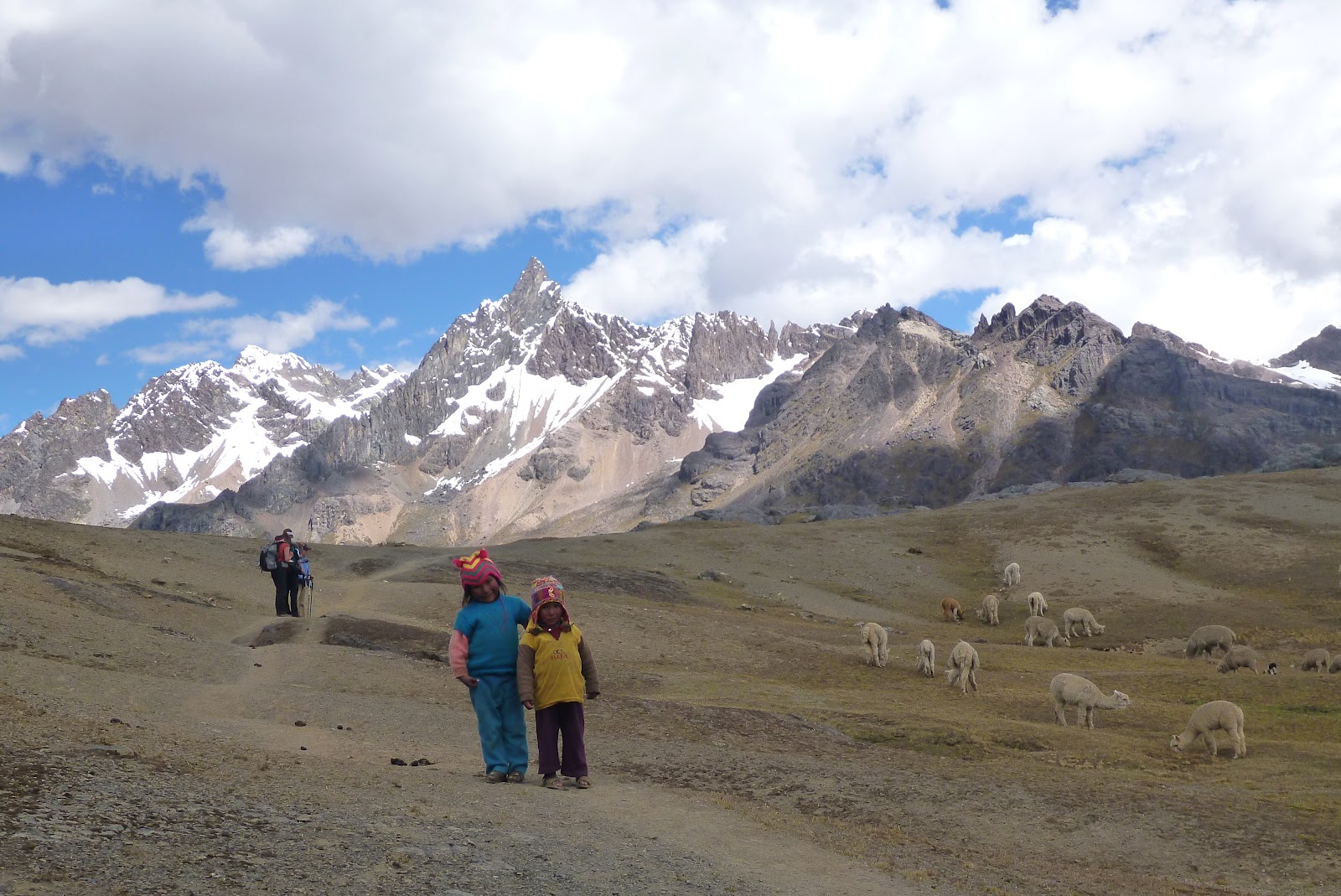
Okay, so we did find some folks with lighter backpacks than us - what do you think of this new design Gossamer? (pictured- Trinity and two local girls near Huayllapa, Peru)
A small backpack makes it easier to hitch (pictured- Trinity and truck driver on dusty, construction-filled road near Punta Olympica, Cordillera Blanca, Peru)
Lightweight backpacking makes it easier to do this... (pictured - Sarah, near Oyon, Peru)
Or this... (pictured - Trinity, Choquequirao, Peru)
And this! (pictured- Shelley, Cordillera Blanca, Peru)
Day one on the trail out of Ushuaia, Argentina, the tres chicas locas, Trinity, Shelley & Sarah, sporting Gossamer's previous version of the Mariposa (note roll-top closure system and mesh side pockets)
Take less, do more!

This Too Shall "Pass"

We have repeated the proverb "this too shall pass" during both trying times such as battling the evil Patagonian horseflies and during invigorating times such as blazing our own trail by swimming across a lake in Lanin National Park. We were recently reminded of the proverb's significance by a fellow traveler who enlightened us with its history as a Jewish proverb - that all material conditions, positive or negative, are temporary.

We kicked off our time here in Peru with a high-altitude punch of three gargantuan passes over a five-day circuit around the powerful Ausangate peak. On the third day as we embarked up the circuit's daunting Palomani Pass (peaking at over 17,000 feet), we exclaimed the proverb aloud as if to say, "we will make it over this darn pass!" Almost simultaneously, we were overcome with a serendipitous feeling of being so fortunate to experience the pass on that day. As we looked ahead to the multiple false peaks of the pass, we sensed the hanging glacier falling over the black cliffs to our left, the soft lines of the dune-like mountains to our right... and when we stopped to catch our breath, control our heartbeat, or regain our balance, we'd peer backward at a lone red mountain with another mountain's sharp black spires peaking out from behind it. In this sense, the proverb evolved to, "always remember feeling this alive".


Magnificent Ausangate Peak

    Llamas and alpacas graze on the alpine tundra sweeping up to these dramatic black and white peaks

View of Palomani Pass
View looking backward from midway up the pass


Moments that should last a little longer...
  • Having Sarah's younger sister Emily as a chica loca! Depsite the stress fracture in her fibula, losing a toenail, and giant bruises on her hips from her pack, this Boise State track star rocked it over this leg's three passes and high altitude.
    Sarah and Emily
Emily and Sarah
  • Again, breaking our record for highest campsite (4,800m) and physical existence (5,200m)
  • Having glaciers so close we feel we could reach out and touch them
  • As the snow was gentling falling on our tent, we could hear icefall from the glacier emptying into the other side of the lake
    Trinity welcoming the glacial morning from the warmth of her sleeping bag
  • I woke up to go to the bathroom in the middle of the night to find a clear, starry sky lighting up the gargantuan glaciar overlooking our campsite. I saw a flash out of the corner of my eye but thought my eyes were playing tricks on me. It happened again so I looked harder- it appears there was heat lightning (or some other great light-producing phenomenon) coming from clouds I could not see behind the glaciated mountain.
  • Emily thought she was going to pass out from excitement walking through the llamas, alpacas and sheep
  • Emily with elpacas!
  • Loving our new packs straight off the press from Gossamer Gear. Lighter, sturdier and comfier! Thanks for getting them to us in time for this resupply. Take less, do more!
    Our new Gossamer packs! So clean...
  • When Sonnet was with us a few months ago, she (unintentionally) ate the group's dinner chocolate. Backpacking faux pas! To avoid a similar situation, Shelley carried the dinner chocolate so Emily wouldn't be tempted.
  • Relaxing in the hot springs at the end of the circuit
    Sarah, Shelley and Trinity taking in the view from the hot springs at Pacchanta
  • Before taking off on the trek, touring the floating islands on Lake Titicaca with Sharon, Laura and Emily Field (Sarah's mother, aunt and sister). We had such a wonderful tour-of-Titicaca vacation with the Fields! Thank you!!
    Indigenous on their floating island in Uros
    Dress up! From left to right: Sarah, Emily, Sharon, Laura, Shelley and Trinity.


Moments that should pass faster...
  • Sarah, Shelley and I are currently just finishing, restarting, or in the middle of a course of antibiotics. A growing pattern seems to be that we get sick in towns and well on the trail.
  • Snowy nights and half-inch layers of frost
  • We started Palomani Pass at approximately 15,500 feet- where our maximum physical performance is estimated to be 50% (and increasing as we ascend the pass) of normal (according to Medicine for Mountaineering: And Other Wilderness Activities by James A. Wilkerson)- and summitted the pass at 17,060 feet (5,200m)
  • At each inhabited camping area or while breaking on the trail, Peruvians would approach us and linger quitely in the background despite our attempts at initiating conversation. Eventually, they would ask if we needed a guide, horses or one man even asked us if we had medicine for white splotches on his face. This would even happen upon waking up in the morning as we pondered how we would change our pants in front of the crowd.
  • We realize people just repeat back to us what we say. For example, I said "Bajamos y despues a la izquierda? (We go down and to the left?)" to which the Quetcha man I was asking said "Sí, bajamos. (Yes, we go down.)" as he continued past me up the hill.
  • Sarah took a phone interview via a pay phone set up outside a shop on the main street of Tinki. Trucks honked in passing to alert potential clientel of their arrival and music was blaring down the block in anticipation of a local marathon.
    Sarah taking a phone interview
  • After selling Sarah a bracelet, the young girl demanded "give me chocolate". When Sarah replied she didn't have any, the girl pointed to items peaking out of the exterior pockets of Sarah's backpack asking if she could have them (including Sarah's bag of trash).
  • Flip flopping between which shoes to hike in Sarah inadvertently left her insoles in the wrong pair and hiked he entire circuit feeling each pebble
  • Return of the mallín (marsh) - skitdattling our way through marshland on our tiptoes to keep our feet dry as the seemingly dry grass beneath our feet gave way to water

With still nearly three months to go, our time here in South America seems to be all too quickly coming to an end- family and friends are already here to hike Macchu Picchu this week (which seemed like eons away when it was planned eight months ago), Sarah returns to the USA in a little over a month (July 10), and we've realized we have limited time in Peru and Ecuador to hike a fraction of what we would love to experience. Now that we have arrived in Peru and our time in South America is fleeting, we are reminded to slow down, breathe, and take in each moment we are rewarded on this amazing adventure - this too shall pass.


Shelley testing the water at our first night's campsite- the Upis hot springs
Sun setting over the mountains and another group's horses at Upis
Hiking over the first pass (Arapa) on our second day
    Two cute kids (with adorable bright-colored hats) that ran up to us on the trail asking for candy
Alpaca grazing

Alpaca grazing near village
Descending into a marshy valley from the mountaintops
Hiking along the glaciars
Trinity in front of Ausangante
View of distant peak as we walked through a gently valley at sundown
Hiking up Qampa Pass (day four)
Trinity, Emily, Shelley and Sarah on the top of Qampa Pass (16,400ft/ 5,000m)
Tourquoise lagoons on our fourth day
Very kind woman selling handicrafts

Glorious Gear


Nearly four months and over one thousand kilometers on the trail, we can tell you the good (our packs), the bad (Steripen), and the ugly (Sarah's t-shirt) with regard to our gear. We could write a short book on the pros, cons, modifications, and I-wish-it-could-do-this-ideas for our gear. For now, we'll stick to what we've left behind, added along the way, what's wearing out the fastest, and a few of our favorite items. For more detail (you gearheads), check out the redlined gear lists on our edited gear page.

Left Behind

  • Steripen - We got a lemon. We tried every trick in the book and whispered sweet nothings to it but it never was reliable.
  • Mate cup and bombilla - We still like mate but don't heat up water for it on the trail
  • Shelley's knee brace - Didn't end up wearing it
  • Sarah's Samsung Galaxy Tablet - Battery life is too short, replaced with a Kindle
  • Trinity's trekking pole - Didn't use it enough
  • Tent floor (temporarily during drier climate)
  • Puffy pants (temporarily during warm weather)
  • Fleece vest (temporarily during warm weather)


Added Along The Way

  • Aqua Mira Chlorine Dioxide Water Treatment (in lieu of Steripen)
  • Razor - um yea, couldn't do without... I hope this doesn't mean we aren't true lightweight backpackers
  • Lotion - the river bathing and heat has dried us out, also helps Sarah's eczema
  • Q-tips - dust storms
  • Deodorant - how else would we make friends?
  • Nearly five dogs and three cats


What has worn out the fastest?

  • Socks - Friction holes and a freak Sarah-related fire on the hostel's heater, we have each already gone through several pairs
  • Shoes - General wear and tear, a dog stole one of Trinity's, Shelley lost a tread
  • Gaiter stirrups - Wear out mad fast! We always carry extra cordage!
  • Sarah's stuff - Enough said
  • Beanies - Shrinkage in wash, all three of us are in the market for new ones
  • T-shirts - General wear and tear
  • Longsleeve shirts - General wear and tear
  • Trinity's fleece pants have multiple holes in the bum and seem to grow new ones daily (stitched with bright green thread... pix to come soon)
  • Tent - We constantly repair the tent to keep small repair jobs from being big ones. From pin-sized holes to loose stitching, we use sil-net seam grip like kindergartners with finger paint. Two nights ago the zipper broke (thank goodness it didn't rain) so the tent is in repair here in San Martin de Los Andes - does this mean we're homeless? Let's hope he does a good job...
  • Blister Band Aids - Blister dressings (of all kinds) are very difficult to come by down here. We've only had success resupplying at the NOLS Patagonia headquarters (which is supplied via the USA) and most recently through Lee White (Trinity's old boss vacationing in the area).
  • Codeine - Miracle drug for easing the pain of stomach sickness


Tres Chicas' Favs:

  • Backpack + Sleeping Pad Combo (Gossamer Gear Ultralight Mariposa Pack and Therm-A-Rest Ridge Rest SOLite Sleeping Pad) - This is the cornerstone of our lightweight system - we can't imagine having a traditional backpack at this point. We pull out the easy-access sleeping pad every stop to use as a sit pad which feels luxurious.
  • Popcan stove - It's cheap and easy for us to find rubbing alcohol (which we use as fuel) at drugstores.
  • Titanium cup - Cleans easily, no residual flavors from previous meals, durable, and we can put directly on a gaucho's (cowboy) wood-fired stove to warm mint tea.
  • Kindle - Our Kindles are lightweight, have a battery life of 30-40 hours, and carry more than just books: Lonely Planet South America Travel Guide, Mountaineering Freedom of the Hills, Medicine for Mountaineering, NOLS Cookery, games (Sudoku, crosswords), pdf or jpeg maps provided by Peter. A huge perk is that Trinity's 3G version taps into South America's 3G network FOR FREE (no SIM card purchase necessary) around towns which allows her to check email. Sarah and Shelley can browse the internet via WiFi at cafes. Are you sold??

Shelley hoping the Steripen works on Tierra del Fuego
Demonstrating the popcan stove to guide friends in El Chalten
Our sole pot and lid (with strainer in the lid) cooking over our popcan stove
Sarah and Trinity reading. Sarah on her tablet (sent back in exchange for a Kindle) and Trinity on her Kindle.
Pebble removal from where Shelley lost a tread. See the pebble in Shelley's hand? 
Can opener/ wine opener support broke off of our multi-tool. We think it's from excessive wine bottle opening.
Thanks Nate for a steller stitch job on Sarah's backpack!
Trinity's mesh repair on bottom of pack - hole likely from pokey bushes and bushwhacking.
Sarah patched a hole when her strap security tore off.
Stuff gets dirty! This is one of our "Shelley" bags post dust storm (sewn by Shelley with fabric purchased from www.rayjardine.com)
This picture of Sarah's shirt was taken two months prior to its retirement... 
Sarah's very dirty and holey shirt
Trinity putting shoes and socks back on after a glacial river crossing in wet snow
Sarah's new shoe vs. old shoe
Titanium cups on wood-burning stove at Don Rial's house three days via horseback from any town. Sarah is also rocking her puffy pants.
Shelley and Trinity tucked into bug headnets and sleeping bags.
Sarah's clothing drying outside her pack.
Big pack vs.little pack, as compared to a backpacker in Torres del Paine
Our home. Trinity marking our location on the GPS. 
Setting up the tent. We stake it out first and then insert Sarah's trekking poles (using Black Diamond's trekking pole-to-tent pole converter to make it taller) to stand it up.
Micro holes in the tent repaired with McNett Silnet
Trinity marking a 2,000 year-old alerce tree grove with our Garmin GPS
Shelley crossing a river with gaiters as added splash protection
Dirty, smelly gear
And, on laundry day, we can clean up pretty well in our dresses